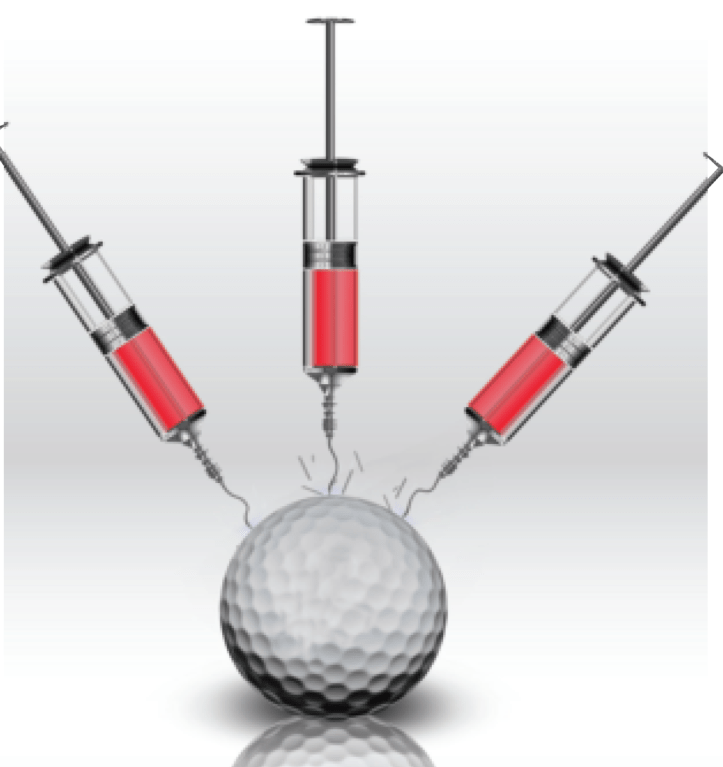
While you may have your opinion about professional golf’s role and place in the Olympics, one of the undoubted positives of its new place in the Games is bringing anti-doping measures in golf to the standard of other sports.
To bid to be a part of the 2016 Olympics, golf had to raise its game when it came to drug testing, and the PGA Tour introduced random testing from 2008.
With golf now in the Games until 2024 at least, the PGA Tour is keen to improve its anti-doping procedures, and will begin blood testing next season as part of its revised programme.
The Tour is also updating its list of banned substances to include those currently forbidden by the World Anti-Doping Agency (WADA).
There is a somewhat popular opinion that performance-enhancing drugs would have a limited effect in professional golf, which is based more on skill and technique than raw power or endurance. There is an element of truth in that. Yet with courses like Erin Hills for the US Open stretching to 7800 yards and its champion Brooks Koepka hitting 360 yard 3 woods on Sunday, we can see how power can come into play in golf.
There is also a definite effect that a drug like HGH could have on a golfer’s practice methods. With much shorter recovery times between working out and hitting balls, a PED user could certainly gain advantage on the competition.
When asked about it during a press conference at the Open last year, Rory McIlroy revealed the lax testing of tournament golfers.
“On average I probably only get tested four or five times a year, which is very little compared to the rest of the Olympic sports. I mean, for example, HGH (Human Growth Hormone), you can’t really pick it up in a urine test.
“I could use HGH and get away with it. So I think blood testing is something that needs to happen in golf. If golf is in the Olympics and wants to be seen as a mainstream sport as such, it has to get in line with other sports and test more rigorously.”
Here in Ireland, Irish golfers are by far the least tested under Sport Ireland’s anti-doping programme: according to figures released in March of this year, of the 1,003 tests carried out in 2016, only one was in golf, and that was for the Irish Ladies Golf Union.
As Ian O’Riordan reported in the Irish Times, golf has a significantly higher percentage of adverse analytical findings than sports such as athletics, cycling, rugby and soccer according to WADA. This was from a relatively small number of samples (507) compared to 25,830 in athletics and 22,471 in cycling.
Golf needs to be more rigorous with its testing, but perhaps the biggest news to come from the PGA Tour was that suspensions of players abusing any banned substance will be announced publicly for the first time.
The fact that the PGA Tour will now announced players that have failed tests will make all the difference. Before it felt like the public did not really know what was going on, and if a player disappeared through injury for a few months, could we really trust the official line?
Take for example, the Dustin Johnson scandal in 2014, when Golf.com reported that he was suspended for six months for testing positive for cocaine, and had previously failed two more tests for recreational drugs.
Johnson took a ‘leave of absence’ from golf to fight ‘personal problems’. He claimed he needed to take it because of a problem with alcohol, a somewhat more socially acceptable problem. Under the PGA Tour’s drug-testing policies, the Tour was not required to announce any disciplinary actions against players who tested positive.
According to Golf.com, when he supposedly tested positive in 2012 for cocaine, it was when he took 11 weeks off with a ‘back injury when lifting a jet ski’.
Without the official story, the game of Chinese whispers commences, and nobody has clarity over the real story. Transparency from the Tour is long overdue, and this is an important step towards a cleaner and more accountable sport.
 The Power Drive